Good Fire: Tending Native Lands @ the Oakland Museum of California - 2026 Charles Redd Honorable Mention
Indigenous fire is culture and renewal. Since time immemorial, tribes across what is now known as California have used low-intensity fire to steward their lands for nourishment, basketry, healthy ecosystems, and healing. Colonization brought many forms of violence, including the suppression of fire that created a dangerous build-up of fuels and resulting megafires. Native Californians continue to assert their sovereign right to steward their homelands with good fire.
With the support of Indigenous collaborators, the Oakland Museum of California (OMCA) developed Good Fire: Tending Native Lands. This exhibition, curated by Ryder Diaz, Curator of Natural Sciences, and Dr. Brittani Orona (Hupa) Assistant Professor of Native American Studies UC Davis, explored the histories, ecologies, and artistic practices of Native cultural fire in Northern California.
We are honored to have received an Honorable Mention for the Charles Redd Center for Western Studies Award for Exhibition Excellence for Good Fire: Tending Native Lands (November 7, 2025 – May 31, 2026). We share this award with all of our collaborators whose work directed and shaped the exhibition.
Centering Native Voices
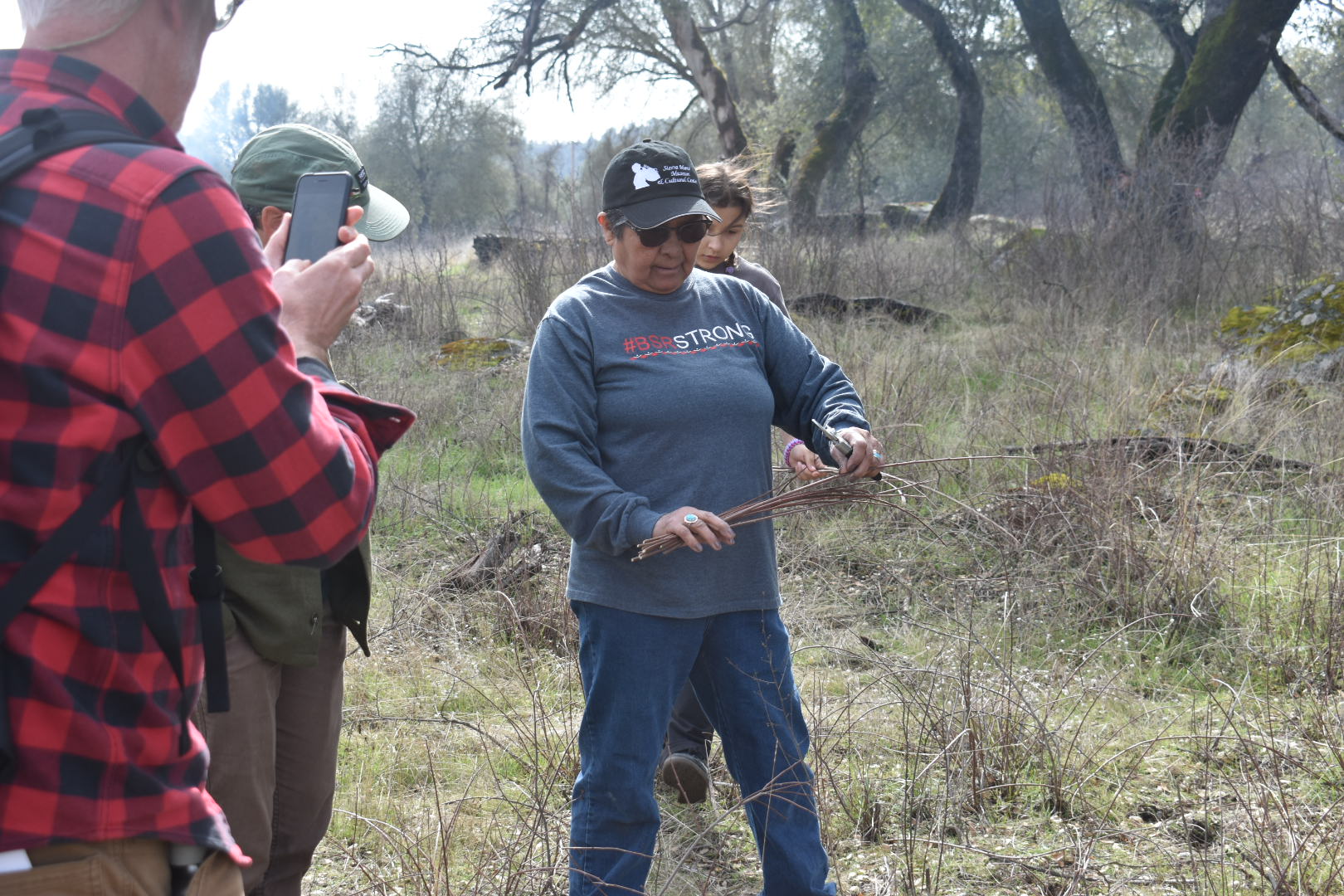
The exhibition team began consultation and deeper relationship building with tribes on this specific topic three years before the exhibition opened. We brought together Native fire practitioners, basket weavers, and culture bearers for discussions on the exhibition’s framework. These conversations shaped the exhibition’s focus on reciprocity, relationships, and interdependence, and the role of fire as necessary for life, culture, and ecological renewal.
The exhibition featured a multidisciplinary mix of history, ecology, and art and included important narratives around Indigenous sovereignty and settler colonialism. The exhibition team prioritized working with living artists, basket weavers, fire practitioners, and culture bearers. This enabled us to highlight for visitors that Indigenous Californians are still here and practicing their cultures. We were also able to compensate our Native collaborators for their labor in supporting the development of the project and for loaning items.
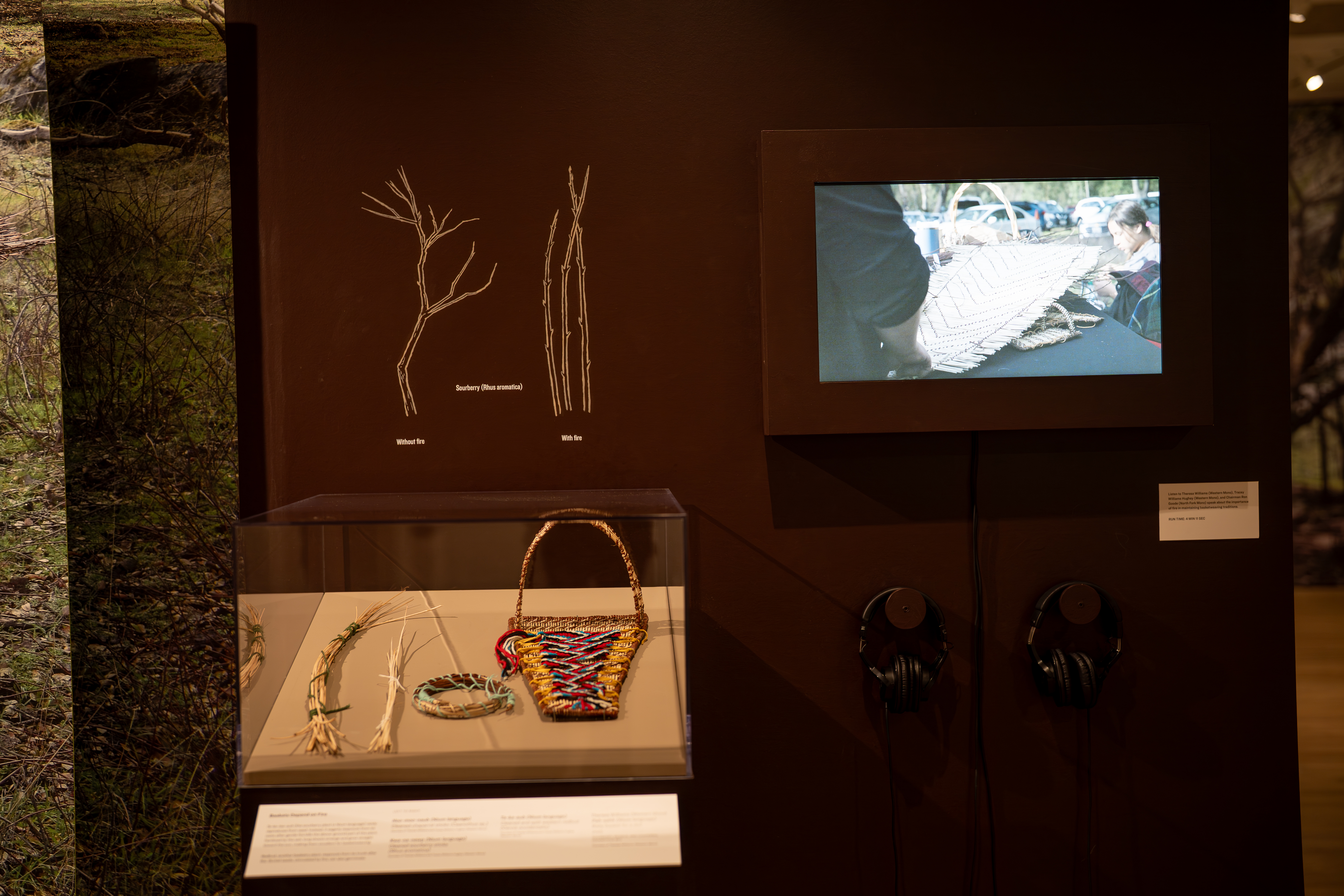
Several basket weavers, including those from the California Indian Basketweavers’ Association, loaned baskets and materials that benefit from cultural fire. Without fire, basketry materials become scarce and the ability to pass down traditional forms of art and cultural knowledge is impeded.
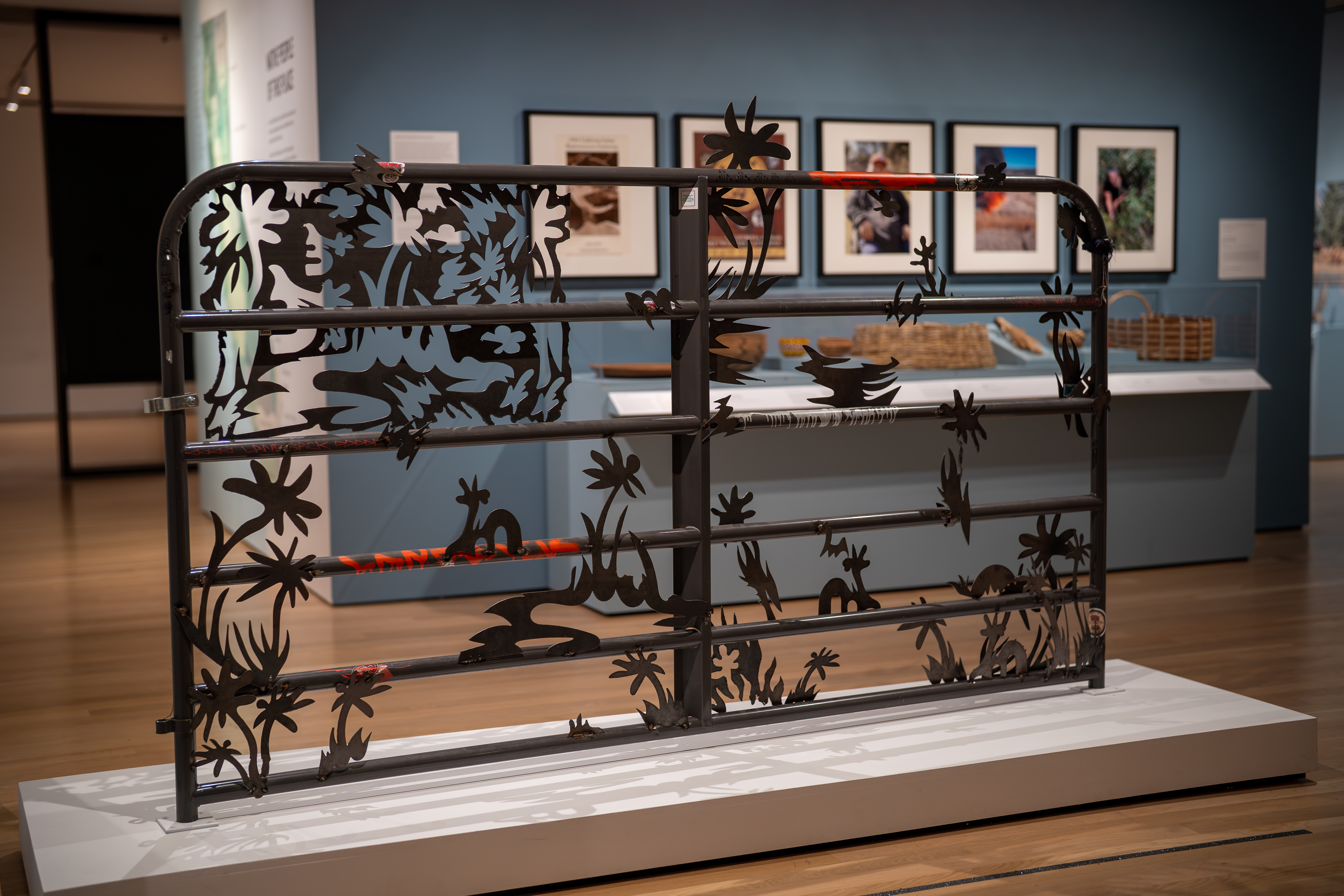
Indigenous land stewardship in California is severely inhibited by settler colonialism. Tribes in California and tribal members are routinely surveyed, arrested, and legislated against by state, federal and private property owners in their ability to practice cultural fire, to gather without threats of violence, and to gain access to traditional territories. The exhibition featured this difficult history, and detailed how Indigenous fire practitioners both work with and against the state in continuing their cultural heritage and relationship to the land. Yurok/Libyan artist Saif Azzuz’s artwork “Who says,” a modified cattle gate with welded leaves, graffiti, and slogans from tribes in Northern California, represents both the continued effects of settler colonialism but also Native resistance to settler encroachments over Native lands. The cattle gate also speaks to the inability for Native cultural practitioners, namely Hupa, Yurok, and Karuk peoples, to gain access to lands in their traditional territories, which are now used for destructive and extractive industries, such as ranching.
Honoring Indigenous Knowledge
The exhibition team wanted the project to highlight the incredible depth of place-based ecological knowledge that each tribe possesses about their homelands, but not fall into the trap of being extractive. Knowing when, where, and how to burn depends on generations of ecological experimentation. This is the intellectual property of tribal members. Each display was co-created with our collaborators and we followed their lead in what information should be shared and what information could not.
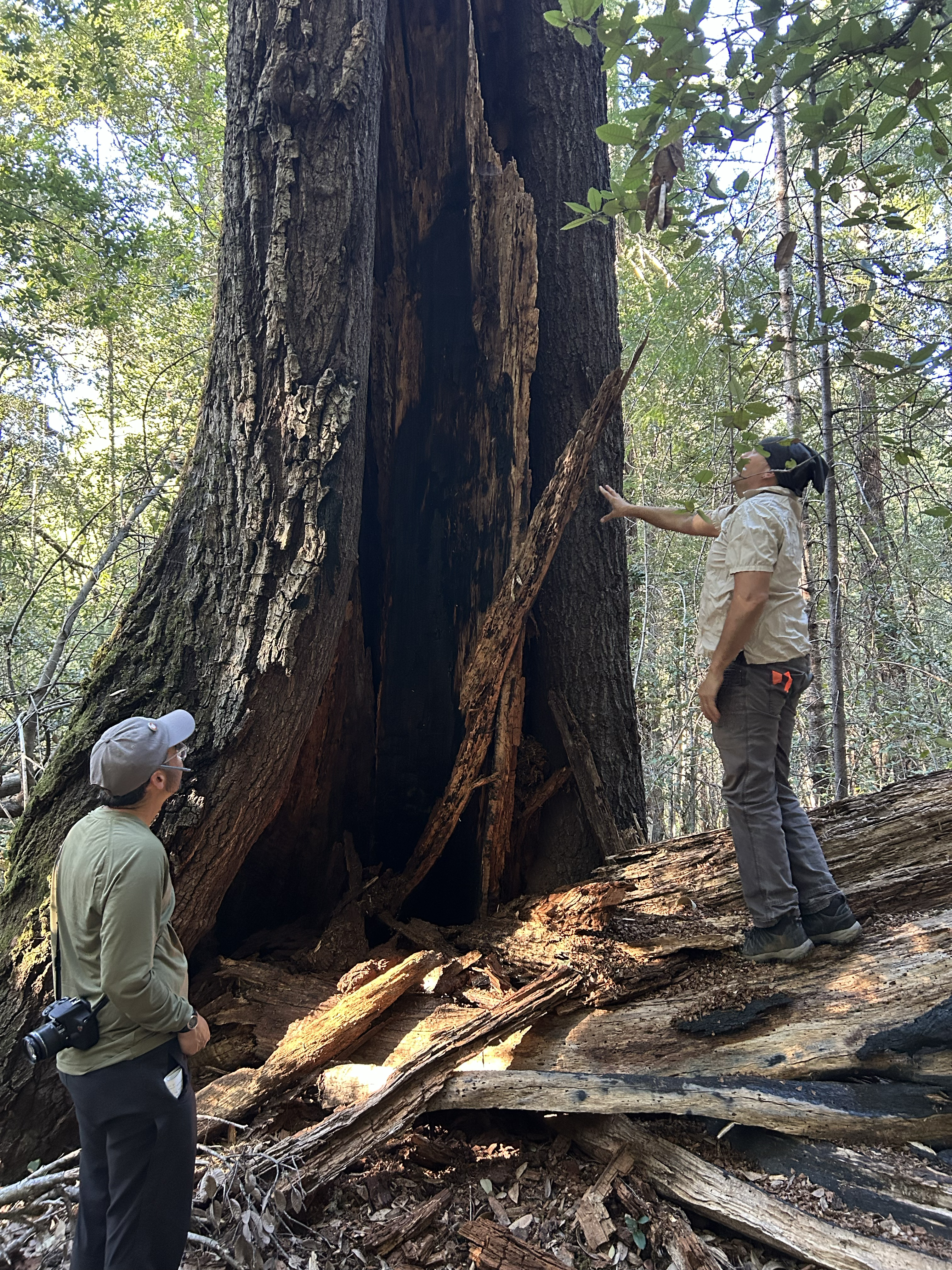
The exhibition team visited cultural practitioners on their homelands and locations that are stewarded by fire. We learned which plants need fire to germinate and we learned how fire supports the health of many culturally important species. Each step of the way, every panel that was written, and every item selected for the exhibition, was done in consultation with tribal communities and individual tribal members.
The exhibition featured the work of Native artists, Native filmmakers, and commissioned Native illustrators and artists for new pieces. It was essential for the Oakland Museum of California to work with tribal practitioners on a topic that is altogether violent, inspiring, and ongoing. The California Native collaborators were generous with their time and their expertise creating an exhibition that blended ecology, history, and artistic practice.
Ryder Diaz (he/they) is the Curator of Natural Sciences at the Oakland Museum of California. Ryder holds Bachelors degrees in Metropolitan Studies and in Gender and Sexuality Studies, a Masters degree in Population Biology, and a graduate certificate in Science Communication. Ryder has been developing museum exhibitions for more than 12 years.
Brittani R. Orona (she/her) is an Assistant Professor of Native American Studies at UC Davis. She holds a Ph.D. in Native American Studies with an emphasis in Human Rights, a M.A. in Native American Studies at UC Davis, M.A. in Public History at Sacramento State University, and a B.A. in History at Cal Poly Humboldt. She is Hupa and an enrolled member of the Hoopa Valley Tribe.
Add new comment