Woven in Wool: Resilience in Coast Salish Weaving @ The Burke Museum - 2026 Charles Redd Award Recipient
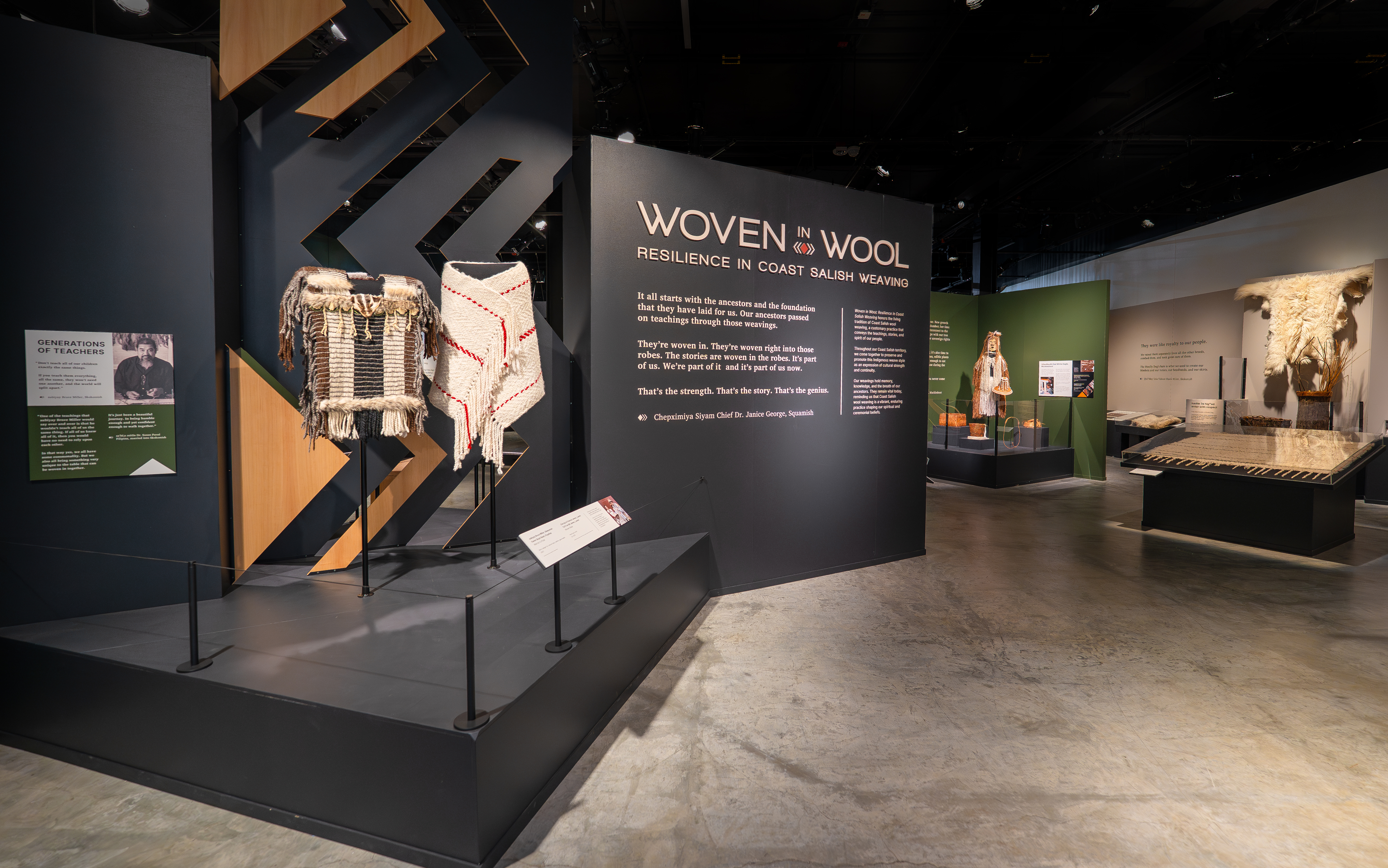
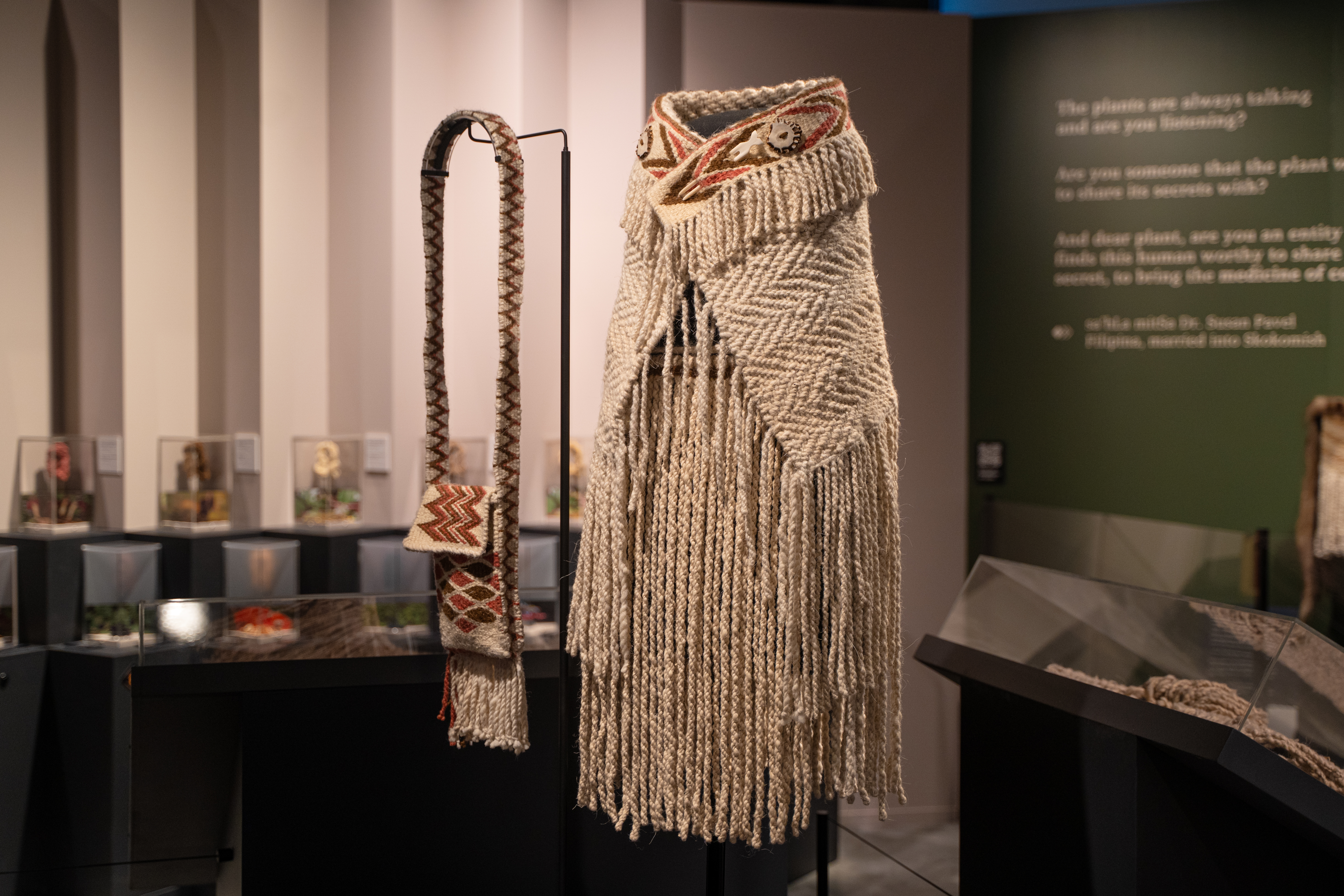
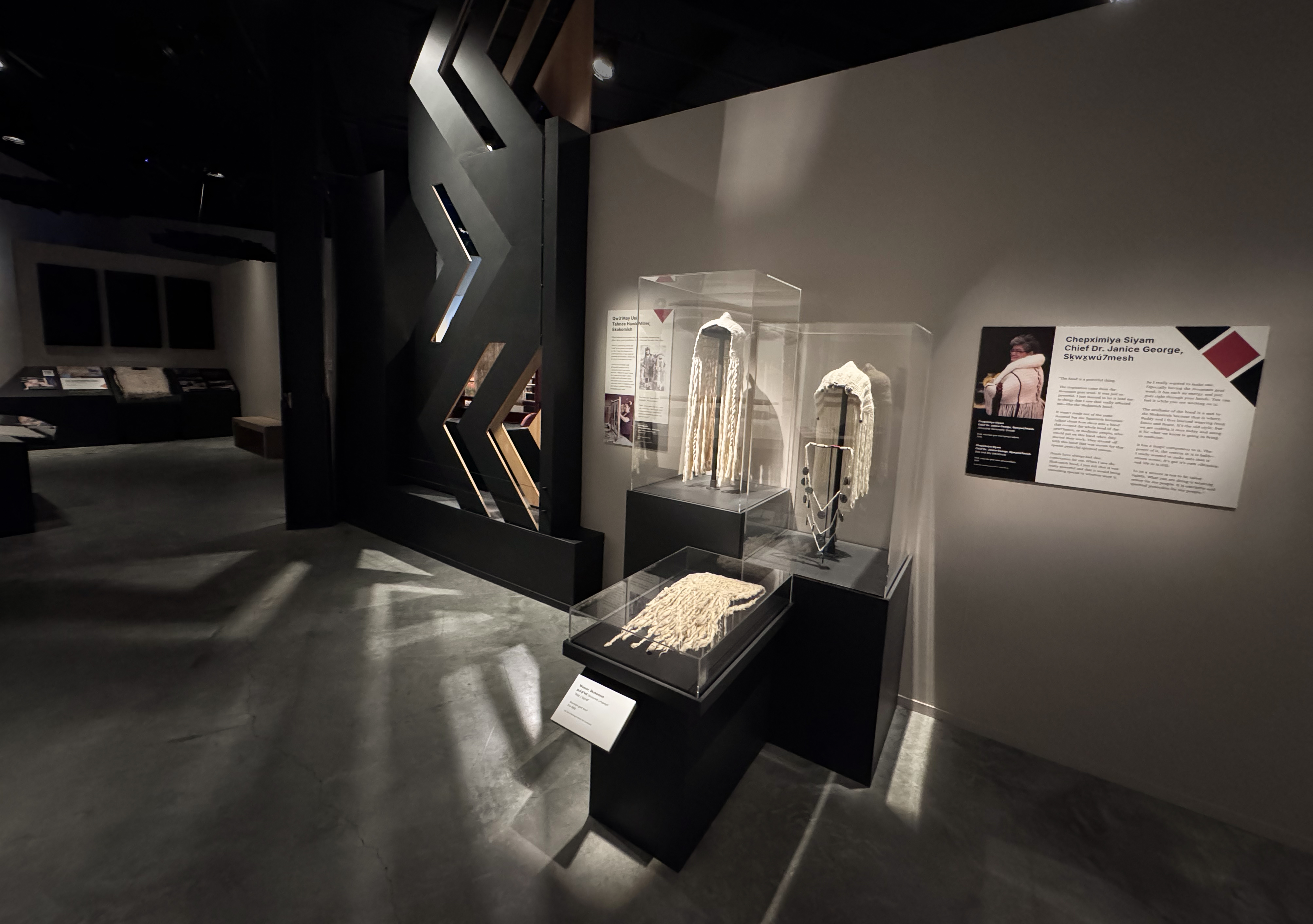
Woven in Wool: Resilience in Coast Salish Weaving showcased historical and contemporary woven items, including blankets, hoods, and skirts. Visitors to the Burke Museum of Natural History & Culture followed the seasonal cycle of weaving as they journeyed through the exhibit—from gathering materials and spinning wool to dyeing with natural ingredients and weaving intricate designs.
Along the way, guests learned firsthand from the co-curating weavers about the deep cultural and scientific knowledge embedded in every strand. Ninety weavings, tools and materials — including loans returning to Coast Salish territory for the first time in a century — were displayed alongside contemporary pieces by the co-curators. Text and audio recordings integrated Indigenous language terms into the exhibit, revealing the deep insights that Indigenous vocabularies carry. Touchable replicas of spinning and weaving tools, and opportunities for guests to try weaving and pattern-making invited all who visited into this living practice.
Weaving Together the Exhibit
Board members of the nonprofit Coast Salish Wool Weaving Center (CSWWC)—all weavers from Salish communities—first approached the Burke with the idea of a collaborative weaving exhibit. As the first ground-up special exhibition in the new building (opened Fall 2019), we committed to a collaborative approach, ceding authority to the weavers who proposed the project and served as cultural content leads. We began by directing the museum's first project grant to the weavers for a year of research, giving them full control to fund community and museum research visits. They completed these trips independently, selecting potential loan items without Burke staff direction.
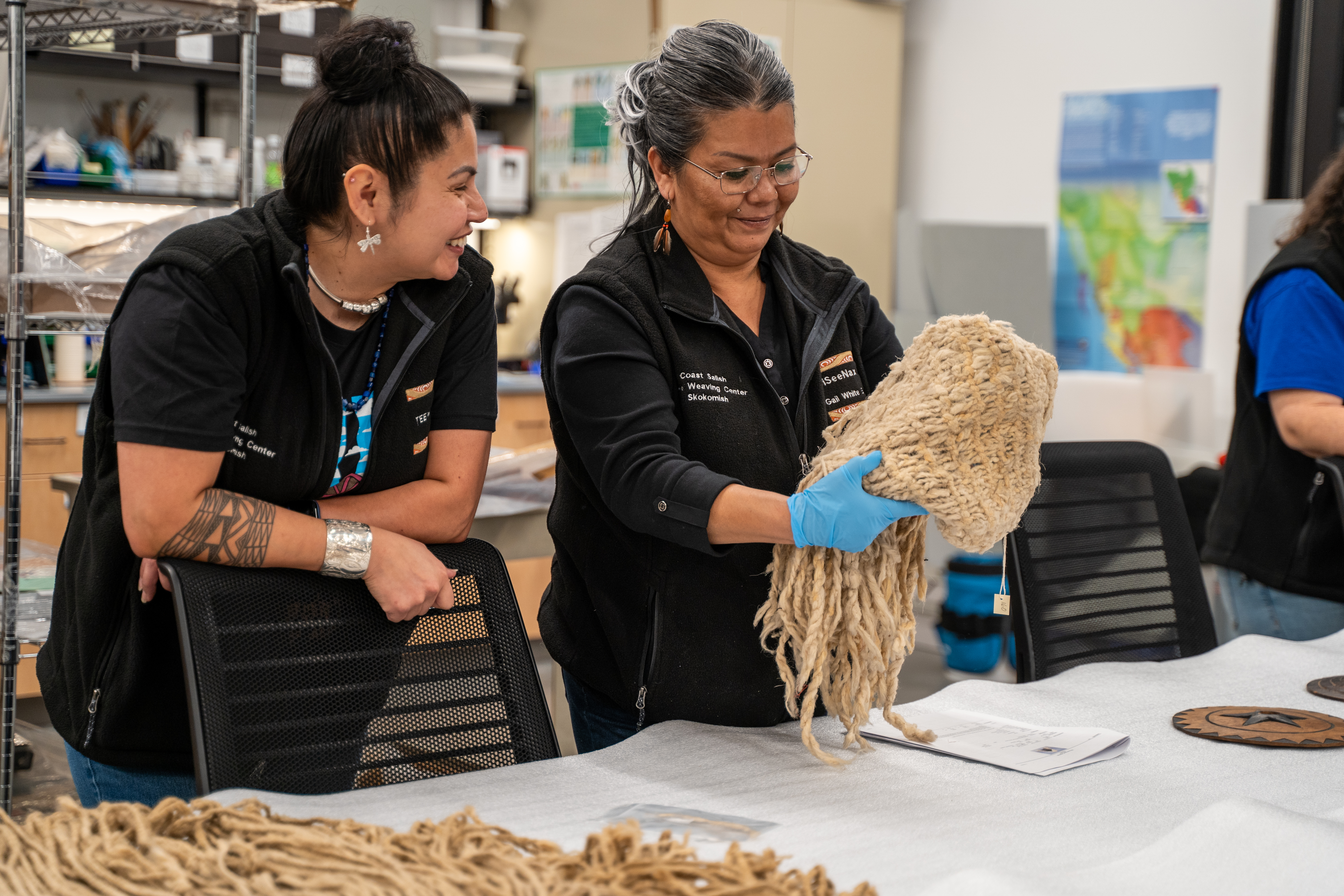
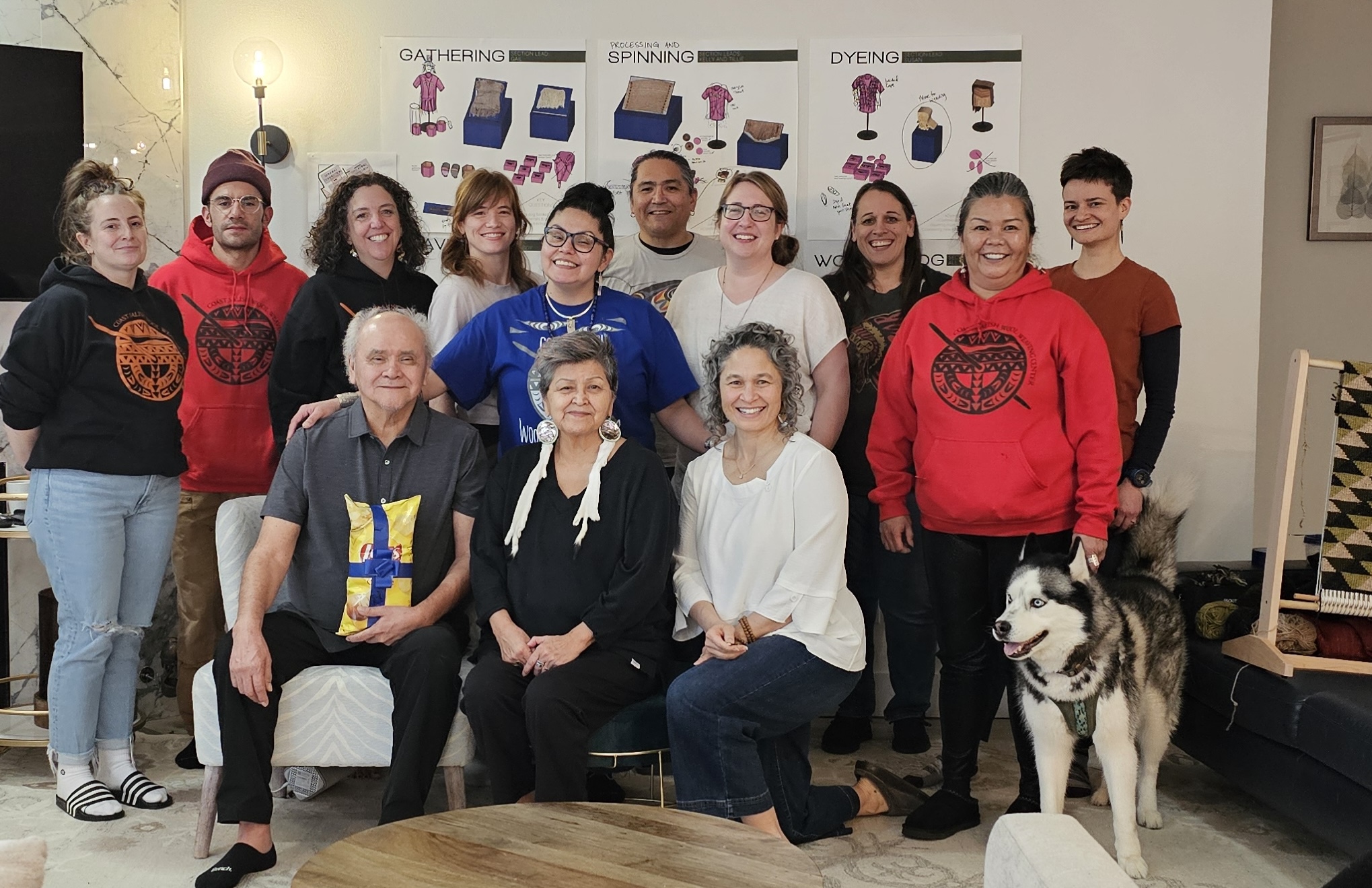
Over the next two years of planning, design and fabrication, the museum staff and weavers invested many hours on not just building an exhibit, but building relationships with each other. Quarterly in-person retreats created time to eat meals together and meet each other’s families (and an occasional pet) between conversations about labels, wall colors and budgets. As the often-frantic final months before opening approached, those relationships kept us focused on the greater purpose and meaning of the work.
Programming Expands and Deepens Exhibit Reach
Before the exhibition opened its doors to the public, our very first formal program was an Indigenous Preview. This evening event, with invitations sent to tribes and community organizations across the region, opened the exhibit with cultural protocols of blessings and gifting to thank and recognize the work of the many hands that made this exhibition a success.
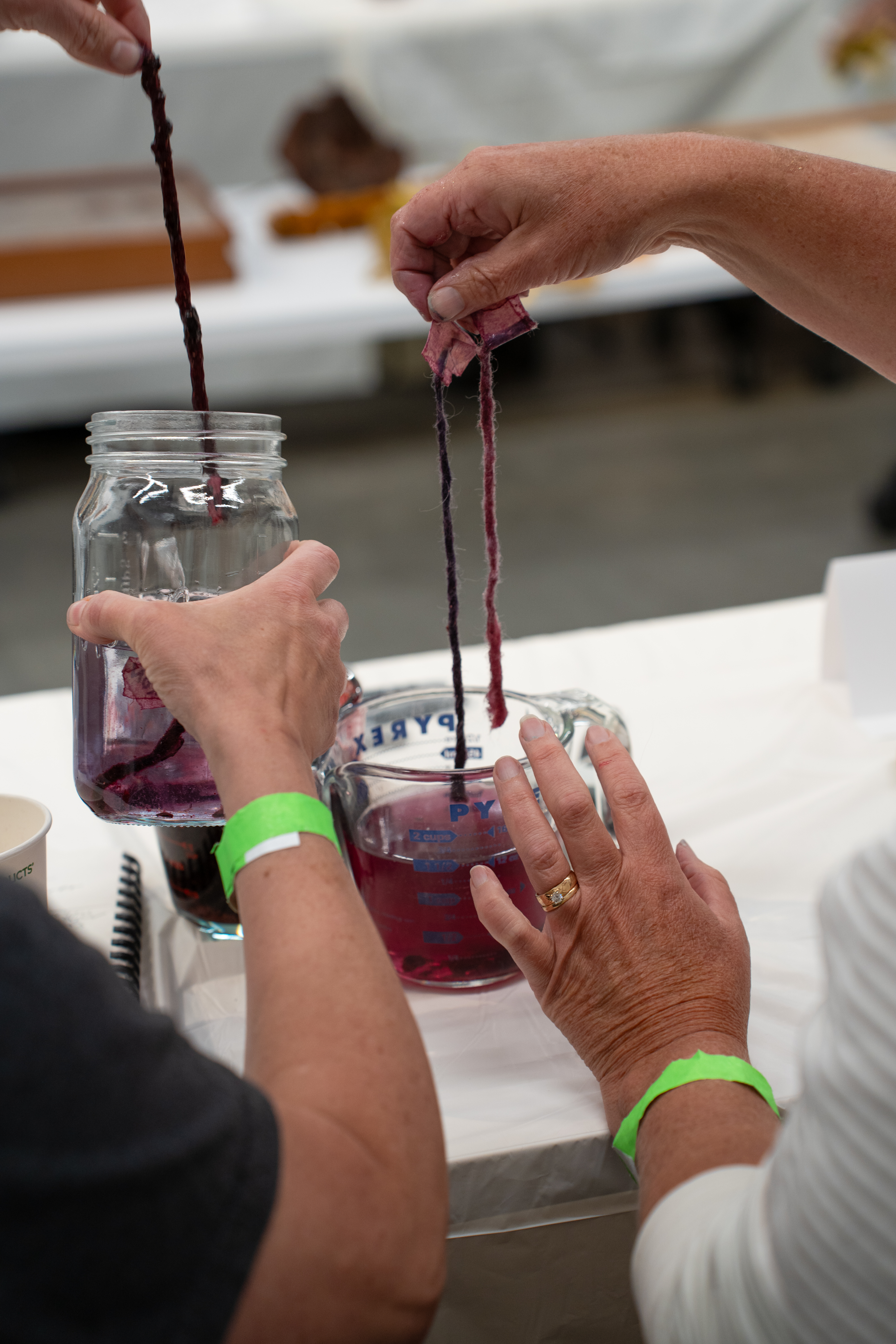
Throughout the run of the exhibit, many types of programming deepened opportunities to learn and be inspired by the science and art of Coast Salish weaving. Public lecture programs included the book launch for The Teaching of Mutton: A Coast Salish Woolly Dog and a film screening for the documentary Threads that Bind: The Story of the Woolly Dog.
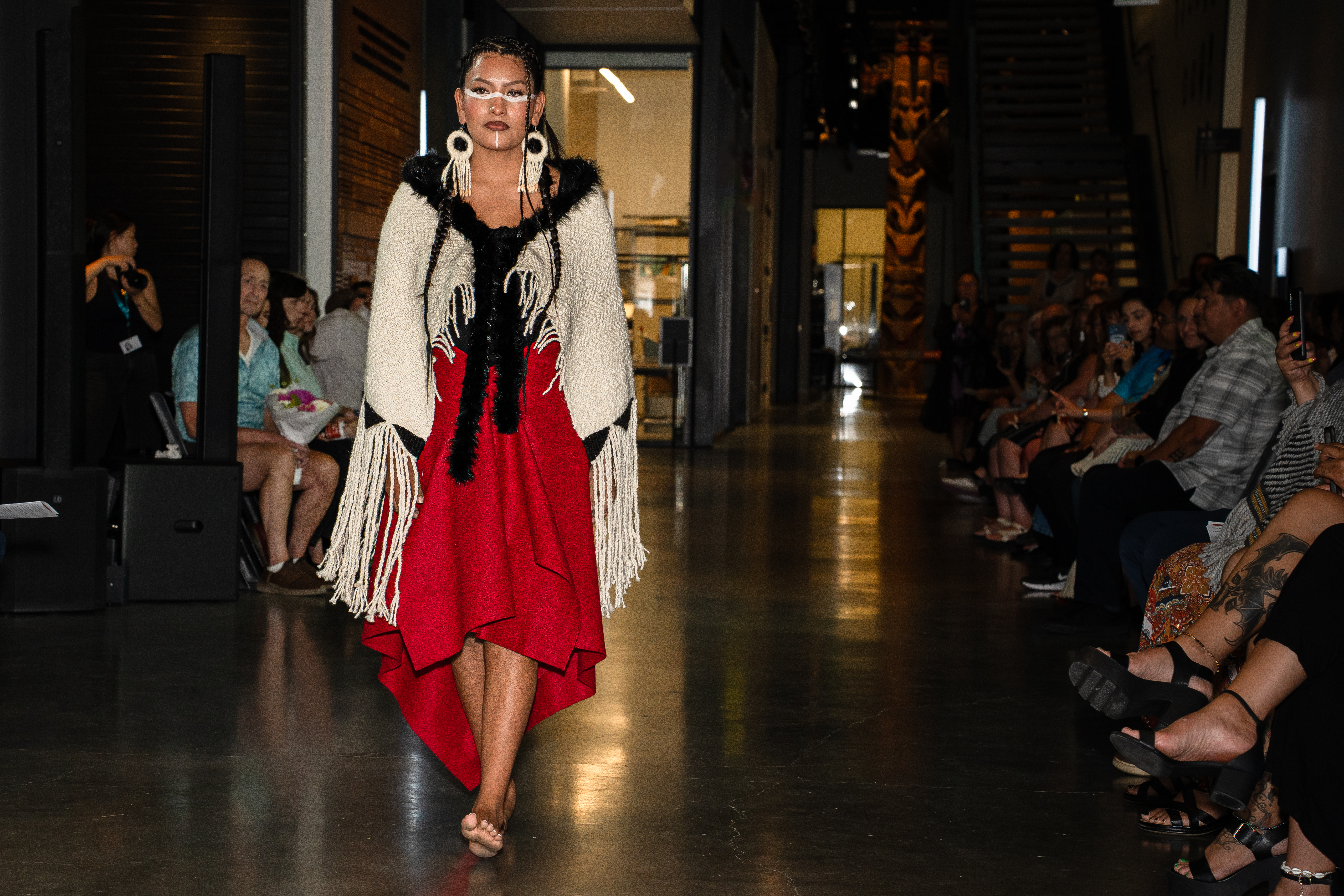
We hosted more than 20 related artist demonstrations over the course of the exhibit development and display period, featuring weavers, toolmakers and others whose work resonated with the exhibition’s themes. A Native Plants and Natural Dyes Workshop offered the chance to harvest and prepare some of the natural dyes showcased in the exhibit. To celebrate the closing of the exhibition, the Weaving into the Future Indigenous Fashion Show brought the museum to life with Coast Salish woven garments, earrings and carved silver jewelry.
T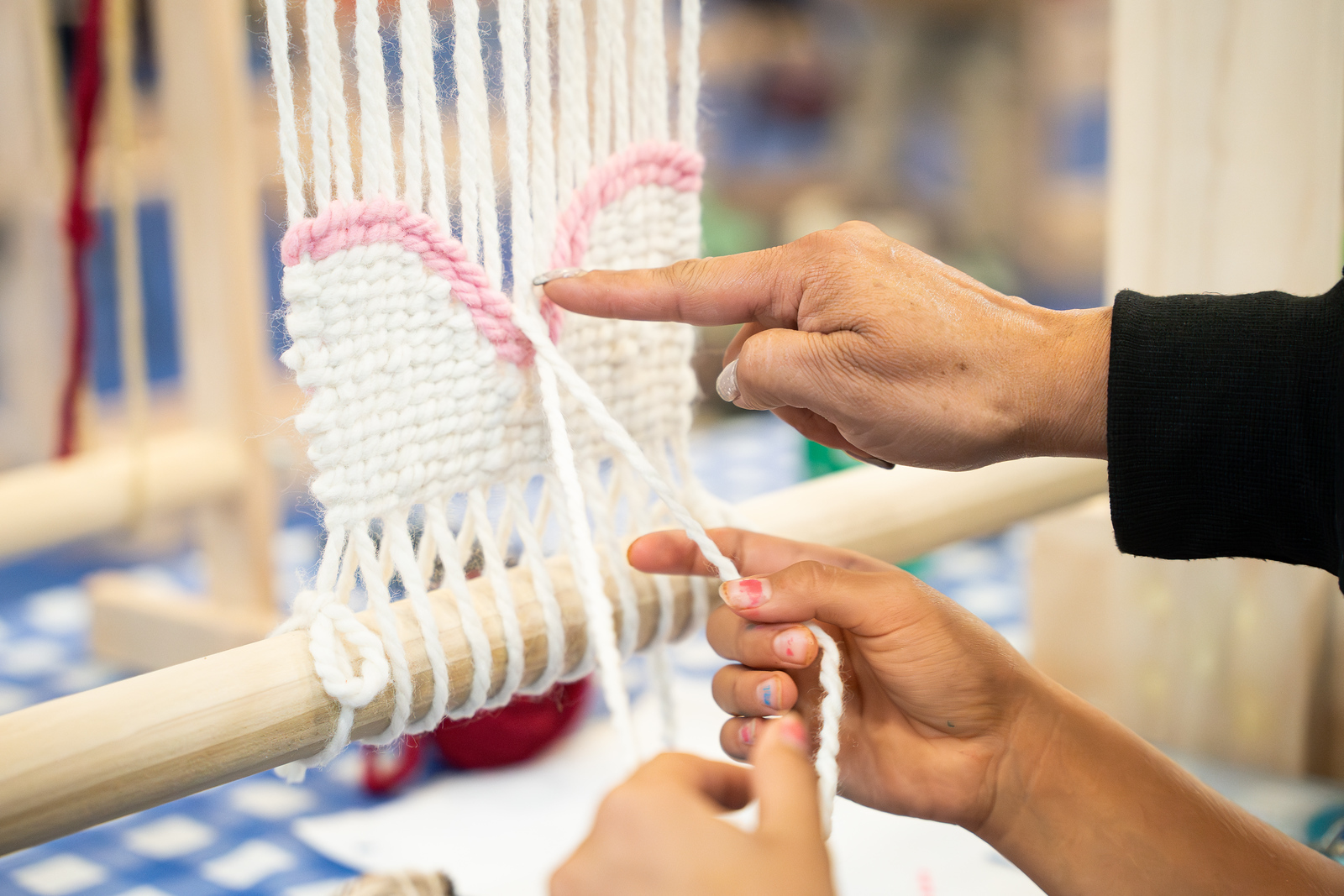 he Continuing Journey
This exhibit is one more link in the ongoing work to celebrate and uplift Coast Salish lifeways. The research and resources it generated will support the CSWWC as they continue teaching the next generation of weavers. We hope the project’s impact helps advance Indigenous-led cultural curation more broadly, and we're grateful to WMA for this recognition and the continued opportunity to advocate for this work and our partners.
Melissa Kennedy is the Director of Interpretation at the Burke Museum of Natural History & Culture. With an MFA in Exhibit Planning + Design and a B.A. in Art History, she’s worked in the museum field for over a decade at institutions ranging from history to contemporary art museums. Her work focuses on centering first-person narratives, sharing scientific knowledge in accessible ways, and fostering engagement to inspire guests to connect to each other and the world around them.
Add new comment